Two records, one important connection
The Keith Olsen connection to Fleetwood Mac begins before Lindsey Buckingham and Stevie Nicks joined the band. Their 1973 duo record, Buckingham Nicks, was produced by Olsen at Sound City. It provided a recorded example of their musical partnership before their later careers made that partnership familiar to a much larger audience.
The next essential reference is Fleetwood Mac's 1975 self-titled album. It was the first studio album by the lineup with Buckingham and Nicks. It was not the group's debut: Fleetwood Mac already had a substantial history and had previously released a self-titled album in 1968. Keeping those titles and years straight prevents a surprisingly common error in brief online biographies.
The studio playback in context
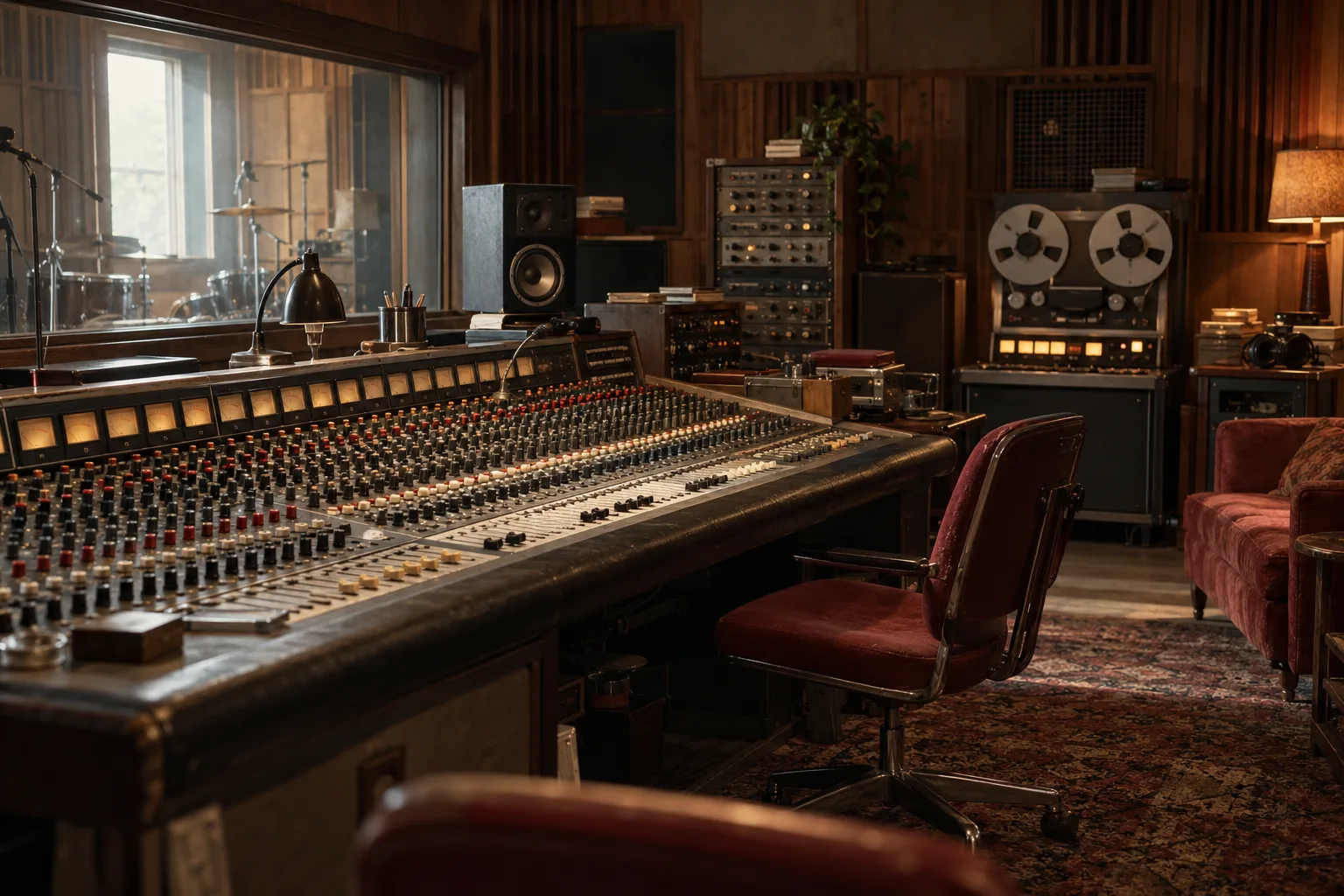
Rhino's history of Buckingham Nicks recounts Mick Fleetwood visiting Sound City while considering a studio for Fleetwood Mac. Olsen played Frozen Love as an example of the recording work and studio sound. Fleetwood heard Buckingham's playing; after Bob Welch's departure, an opening in the band turned that impression into a practical opportunity.
In that account, Buckingham's insistence on joining with Nicks is central to the eventual lineup. The useful historical claim is that Olsen's earlier production and the playback formed part of the connection. It would be too simple to describe him as the sole creator of everything that followed. The musicians made decisions, the band had needs and an existing recording gave their work a setting in which to be heard.
That is also why this episode is interesting beyond celebrity history. Recorded work can function as a professional introduction. A finished album shows musical judgment, performance and collaboration more fully than a name or a recommendation alone. The opportunity depended on people hearing music, not on a future sales story already written.
The duo album deserves its own identity
Buckingham Nicks is often discussed only as a prelude. Listening to it as a record changes that perspective. There are two songwriting voices, an established vocal relationship and arrangements built for this particular project. The later band context helps explain its place in history, but it should not replace the album's own musical questions.
Ask how the singers support each other and where an arrangement gives one of them more room. Notice the differences between an acoustic passage and a fuller band texture. Those are editorial listening prompts, not recovered instructions from the session. They encourage attention to the actual recording without attributing every detail to one participant.
Its availability also needs accurate dates. Rhino's 2025 reissue brought the album back in new editions; that date does not become its original release year. A credit discussion should keep the original production separate from the later mastering and reissue team. The distinction matters when readers compare editions or build a collection.
What changed with the five-member band
The 1975 record joined the new members to Mick Fleetwood, John McVie and Christine McVie. The result had to accommodate several musical identities inside one album. Christine McVie's writing was not an accessory to the newcomers; it was part of the band's established creative strength. Likewise, the rhythm section was part of what made this a Fleetwood Mac recording rather than a second duo album.
From an editorial perspective, that makes the production an exercise in coherence. Different writers need not sound identical for an album to feel connected. Sequencing, instrumental relationships and vocal presentation can give a listener continuity while preserving differences. Those are ways to investigate the record, not claims that we possess the producers' private plan.
Our production listening guide explains how to describe such relationships without guessing at equipment. For this history, the important limit is that a producer credit belongs within a collective process. The songs, performances and established band identity remain the musicians' work.
The 1975 album is not Rumours
Rumours followed in 1977 and belongs to a different production story, associated with the band, Ken Caillat and Richard Dashut. Olsen's connection to the 1975 album does not authorize attaching his name to its successor as producer. A short biography can lose this boundary by referring loosely to Fleetwood Mac's breakthrough era rather than naming the actual record.
The same caution applies to equipment stories. A technical account of a Rumours session does not automatically describe the earlier album, even if some of the personnel overlap. Date, room, track and credited role all matter. A historically plausible detail is still not evidence that it happened in a particular session.
This boundary does not diminish Olsen's role. It makes the role readable. Readers can understand the importance of one collaboration without being given an inflated version of his involvement in the band's whole catalog.
A listening route through the transition
Begin with a track from Buckingham Nicks, then move to a 1975 Fleetwood Mac song featuring one of the new members. Follow the vocal relationship or guitar phrasing that interests you. Then choose a Christine McVie song from the band album. The third step prevents the comparison from treating the entire band as a vehicle for the duo.
You can also examine Crystal, which appears in both album contexts. Compare the presentation of the song rather than trying to declare one version superior. A different ensemble can change the weight of an arrangement and the way a voice sits within it. If you want to discuss an exact performance credit, check the booklet for the version you are playing.
Use the full tracks rather than a few seconds of compressed previews. Keep playback levels similar, and make a note of the editions. A louder remaster may feel more immediate even when the underlying production is the same. Careful listening works better when basic comparison conditions are visible.
How reissues expand the evidence
Rhino's description of the expanded 1975 album includes alternate recordings, single mixes and live material. Such releases can widen the listening picture, but different materials answer different questions. An alternate take reveals another performance. A single mix may reflect another intended listening context. A live recording shows the band presenting the material outside the original studio project.
None is a transparent recording of every production decision. An outtake does not necessarily explain why a final take was chosen, and a later recollection can be selective. Combining a label's documented release information with clear edition notes is more useful than assuming that extra tracks settle the whole history.
The discography guide gives a practical credit notebook method. Applied here, it keeps the 1973 album, the 1975 band album and subsequent reissues from merging into one undated story. That makes future corrections simpler and lets readers locate the music being discussed.
What this connection tells us about production
The larger lesson is about how a recording participates in a career. Olsen's work with Buckingham and Nicks helped preserve a musical partnership on record, and the Sound City playback placed that work before a musician considering a new situation. The subsequent band album turned a changed lineup into a shared recorded project.
The story remains more persuasive when it keeps the people and records distinct. Producers, artists, bands and studios can each matter without one of them absorbing every credit. A useful archive follows those relationships with named releases and dated evidence. It gives readers a way into the music, while allowing the music to remain more complicated than a single turning-point anecdote.
Sources and scope
These references support the named historical examples. Listening prompts and general studio explanations are editorial context, not claims of firsthand session access. Consult original release booklets for exact track and edition credits.